

South Carolina Probate Law: A Practical Guide for Families
What You Will Learn
-
When probate is required in South Carolina—and when it can be avoided
-
The different probate paths available and how to determine which applies
-
What a Personal Representative is legally responsible for under South Carolina law
-
How probate timelines, costs, and common issues affect real families
Probate Does Not Have to Be Overwhelming
The loss of a loved one is difficult enough without uncertainty about legal responsibilities, timelines, and court procedures. Probate is the legal process used to settle a person’s estate after death, but for many families, it becomes stressful simply because they do not know what is required—or what can be avoided.
This page explains how probate works in South Carolina, when it is required, what the court expects, and how families can move through the process with clarity and confidence. It is designed to help you understand the framework before making decisions, not to overwhelm you with legal jargon.
At Rivertown Law, probate is handled with care, efficiency, and respect for the family involved. We focus on practical solutions that protect the estate, comply with South Carolina law, and allow families to move forward.
What Probate Is Under South Carolina Law
Probate is the court-supervised process used to identify, manage, and distribute a deceased person’s assets. In South Carolina, probate is administered through the South Carolina Probate Court, typically in the county where the decedent lived at the time of death.
Probate generally serves four core purposes:
It confirms the validity of a will, if one exists.
It appoints a Personal Representative (sometimes called an Executor).
It ensures debts and lawful claims are addressed.
It distributes remaining assets to heirs or beneficiaries.
Not every estate requires formal probate, and not every asset passes through probate. Understanding the distinction is often the most important first step.
When Probate Is Required — and When It Is Not
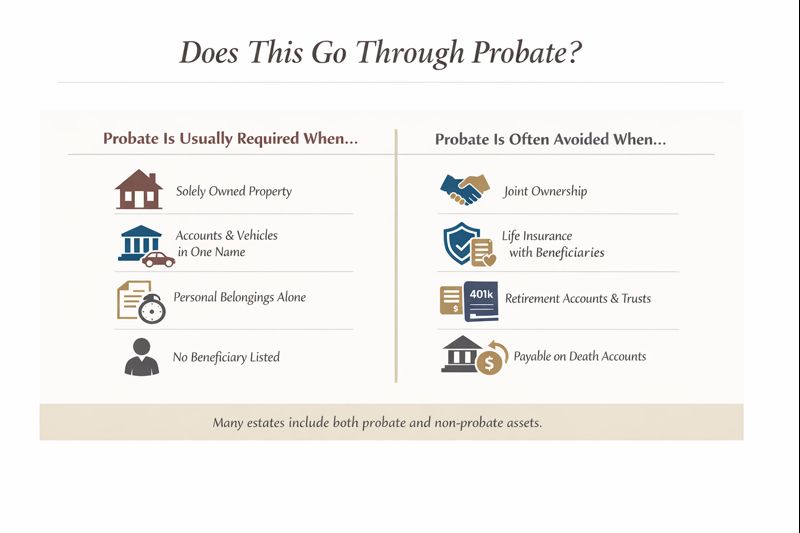
Probate is usually required when a person dies owning assets in their individual name alone. Common examples include real estate, bank accounts, vehicles, or investment accounts without a named beneficiary.
Probate may be avoided or simplified when assets pass automatically by operation of law, such as:
Jointly owned property with right of survivorship
Life insurance policies with named beneficiaries
Retirement accounts with beneficiary designations
Payable-on-death or transfer-on-death accounts
Assets held in a valid trust
South Carolina law also provides streamlined procedures for smaller estates. Determining whether probate is required—and which type applies—depends on asset structure, not just estate value.
- Learn more about Avoiding Probate Through Planning
Types of Probate in South Carolina
Informal Probate
Informal probate is the most common process when there is a valid will and no anticipated disputes. It involves filing documents with the Probate Court, appointing a Personal Representative, and administering the estate with limited court supervision.
This process is typically faster and less costly, but it still requires careful compliance with notice requirements, deadlines, and accounting rules.
Formal Probate
Formal probate is required when there is a dispute, uncertainty about the will, or disagreement among heirs or beneficiaries. The court takes a more active role, and hearings may be required to resolve contested issues.
Formal probate often arises in situations involving:
- Will challenges
- Questions about capacity or undue influence
- Disputes over the appointment of the Personal Representative
- Conflicts among heirs
- Learn more about Informal vs. Formal Probate
Small Estate Administration
South Carolina allows certain estates to be administered without full probate when the total probate assets fall below statutory thresholds and specific criteria are met. This process can significantly reduce time and expense, but eligibility must be carefully evaluated.
- Learn more about Small Estate Administration
The Role of the Personal Representative
The Personal Representative is legally responsible for administering the estate. This role carries fiduciary duties under South Carolina law and should not be taken lightly.
Key responsibilities include:
Identifying and securing estate assets
Notifying heirs, beneficiaries, and creditors
Paying valid debts and expenses
Filing required inventories and accountings
Distributing assets according to the will or intestacy law
Even well-intentioned Personal Representatives can face personal liability if mistakes are made. Legal guidance helps ensure compliance and reduces the risk of conflict.
- Learn more about Duties of a Personal Representative
Probate Timelines in South Carolina
Many families ask how long probate takes. The answer depends on the estate’s complexity, the presence of disputes, and whether all required steps are completed properly.
In general:
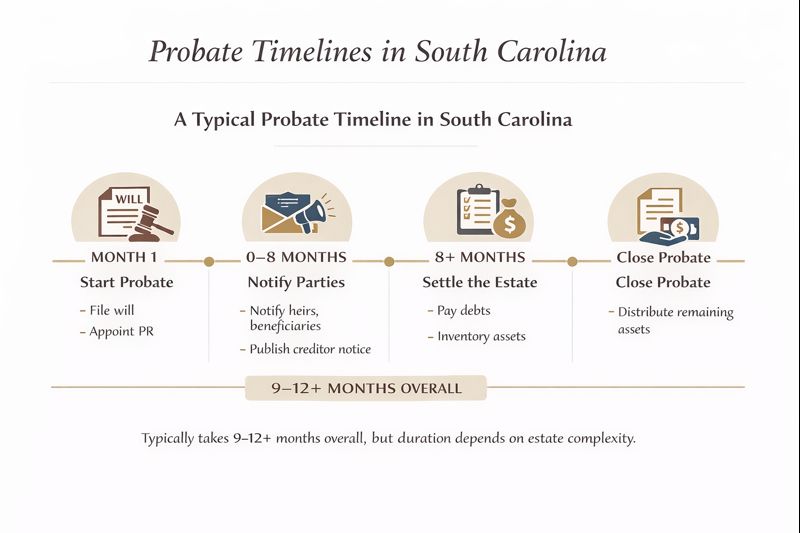
Most estates remain open for at least eight months due to creditor claim periods.
Simple, uncontested estates often resolve within 9–12 months.
Contested or complex estates can take significantly longer.
Delays often result from incomplete filings, missed deadlines, asset valuation issues, or disputes among interested parties.
What Happens When There Is No Will
When someone dies without a valid will, South Carolina’s intestate succession laws determine who inherits the estate. These laws prioritize spouses, children, and other close relatives in a specific statutory order.
Importantly, intestate succession does not account for personal preferences, family dynamics, or informal promises. This can lead to results that surprise or frustrate surviving family members.
Probate is still required in intestate estates, and the court will appoint a Personal Representative based on statutory priority rather than personal choice.
Costs and Expenses in Probate
Probate costs vary based on estate size and complexity. Common expenses include:
- Court filing fees
- Publication and notice costs
- Appraisals and valuations
- Attorney’s fees
- Accounting or tax preparation costs
South Carolina does not impose a percentage-based probate tax, but careful administration is still essential to control expenses and avoid unnecessary complications.
Probate Disputes and Will Contests
While many estates proceed through probate without conflict, disputes can arise when expectations, legal documents, or family relationships collide. Probate disputes often involve questions about the validity or interpretation of a will, disagreements over how assets are distributed, or concerns about the actions of a Personal Representative. In other cases, conflict may stem from allegations of undue influence, lack of capacity, or improper handling of estate assets.
Will contests and probate disputes can be emotionally charged, particularly when they involve close family members or long-standing tensions. South Carolina law provides specific procedures and deadlines for raising objections, and failing to act promptly can limit available remedies. At the same time, not every disagreement requires litigation, and many disputes can be resolved through careful analysis, communication, and strategic guidance.
Our approach is to help clients understand their rights, obligations, and options before positions harden and conflict escalates. When disputes cannot be resolved informally, we provide clear counsel on the probate court process and advocate for practical, legally sound outcomes that protect our clients’ interests while remaining mindful of the personal dynamics involved.
- Learn more about Probate Disputes & Will Contests
Our Approach to Probate Matters
Probate is more than a legal procedure—it is a deeply personal experience for the families involved. At Rivertown Law, we approach probate matters with an understanding that clients are often coping with grief, stress, and uncertainty at the same time they are being asked to make important legal decisions. Our role is to provide clear, plain-language explanations, practical guidance tailored to the specific estate, and steady support throughout the process. We focus on efficient administration without unnecessary conflict, while remaining mindful of family dynamics and the emotional realities that often accompany probate. By helping clients understand their options and meet court requirements, we aim to provide clarity and confidence at a time when both matter most.
When to Speak With a Probate Attorney
You should consider speaking with a probate attorney when you have been named as a Personal Representative, are uncertain whether probate is required, or anticipate disagreement among heirs or beneficiaries. Legal guidance is also especially important when an estate includes real estate or significant assets, when there is no will or the will is unclear, or when the circumstances present a higher risk of delay or error. Seeking advice early in the process often helps families avoid unnecessary mistakes, reduce costs, and move through probate with greater efficiency and peace of mind.

Start a Conversation
Legal issues involving family, property, or long-term planning are rarely just legal problems. They affect people, relationships, and the stability of life moving forward. At our firm, we believe effective legal guidance begins with listening, understanding context, and focusing on solutions that serve you not only today, but over time.
If you would like to discuss your situation and understand your options, we invite you to schedule a confidential consultation.
Schedule a consultation
Submitting this form does not create an attorney-client relationship. Please don't include confidential details until we've spoken with you. For urgent matters, call (843) 488-5600.