

South Carolina Real Estate Law: A Practical Guide for Buyers, Sellers, and Property Owners
What You Will Learn
-
How Real Estate Transactions Work in South Carolina
-
Why Title Examination Protects Your Ownership
-
The Difference Between Residential and Commercial Real Estate
-
How Deeds, Ownership, and Financing Affect Long-Term Rights
Overview
Real estate transactions are among the most significant legal and financial decisions most people will ever make. Whether you are buying a home, selling property, refinancing, or addressing a title issue, the process involves binding contracts, statutory requirements, and financial risks that deserve careful attention.
This page provides a comprehensive overview of real estate law in South Carolina, including how transactions are structured, why attorneys play a central role, and the legal issues that commonly arise in residential and commercial real estate matters. It is designed to help you understand the legal framework governing real estate transactions so you can move forward with clarity and confidence.
This overview is informational in nature and does not replace individualized legal advice.
The Role of Real Estate Law in South Carolina
Real estate law in South Carolina governs the transfer, financing, ownership, and use of land and buildings. Unlike some states, South Carolina requires the involvement of a licensed attorney in most real estate closings. This requirement is not a formality—it reflects the legal complexity of real estate transactions and the importance of protecting the parties involved.
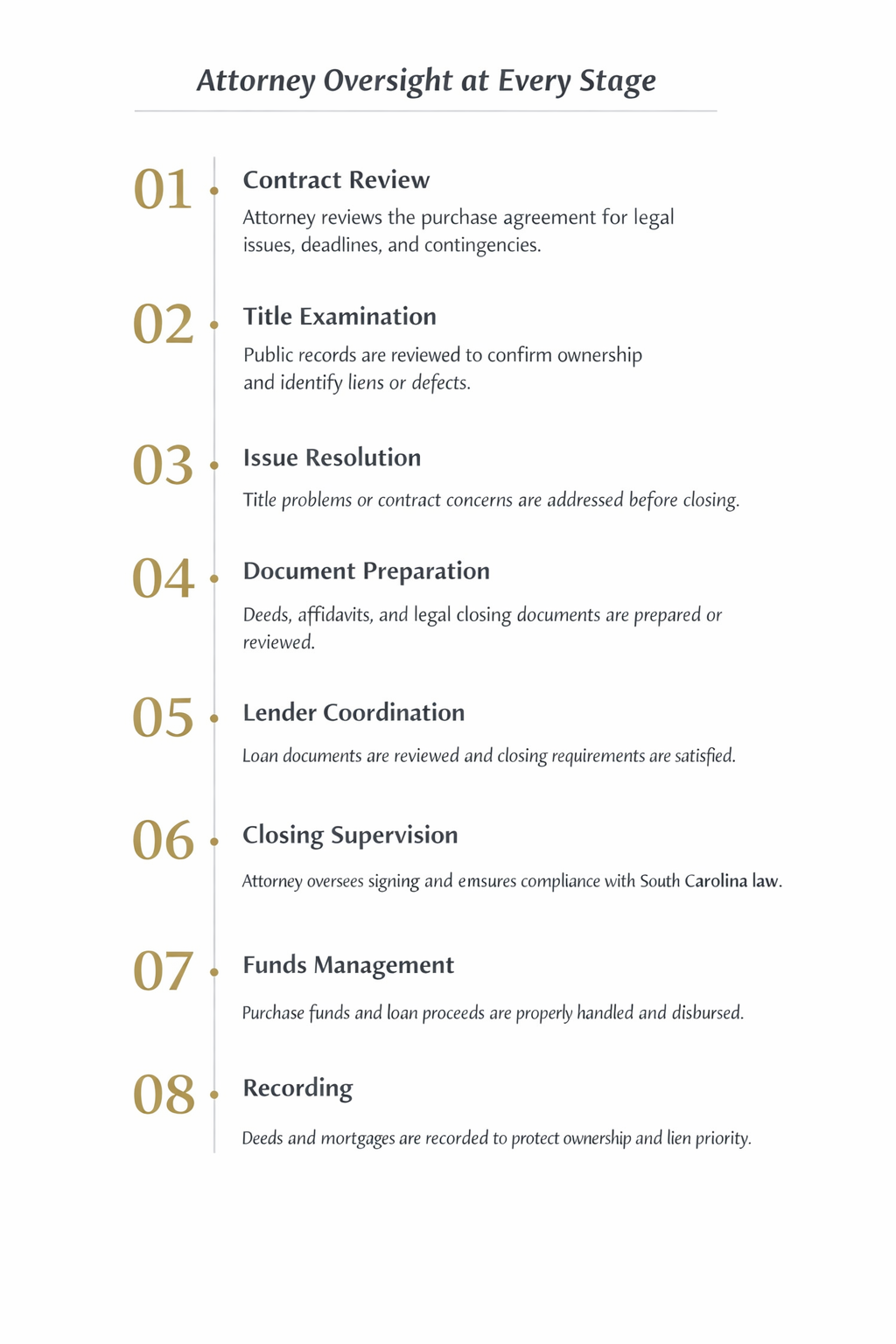
Attorneys oversee title examination, prepare and review legal documents, coordinate with lenders, and ensure that funds and ownership interests are properly transferred. The goal is not simply to close a transaction, but to do so in a way that minimizes future disputes and protects long-term interests.
Attorney Involvement in South Carolina Real Estate Closings
South Carolina follows the “attorney closing state” model. This means that a licensed South Carolina attorney must be involved in the closing process, including the supervision of title searches and the disbursement of funds.
An attorney’s role typically includes reviewing the purchase contract, examining title to ensure marketability, resolving title defects, preparing or reviewing deeds and loan documents, coordinating with lenders and real estate agents, and conducting or supervising the closing itself. The attorney also ensures that the transaction complies with state law and that ownership is properly recorded.
For buyers and sellers, attorney involvement provides a layer of legal protection that extends beyond the day of closing.
- Learn more about Real Estate Closing
Residential Real Estate Transactions
Residential real estate matters commonly include the purchase and sale of single-family homes, townhomes, condominiums, and investment properties. While many transactions follow a familiar pattern, each carries legal risks that should be carefully managed.
Purchase agreements establish the rights and obligations of the parties, including price, financing terms, inspection rights, repair obligations, and deadlines. Title review confirms that the seller has the legal authority to convey the property and identifies any liens, easements, or restrictions that may affect use or value. At closing, deeds are executed, loan documents are finalized, and funds are properly distributed.
A well-handled residential transaction is one where legal issues are identified early and addressed before they become costly problems.
Commercial Real Estate Matters
Commercial real estate transactions often involve higher stakes and more complex legal considerations. These matters may include office buildings, retail properties, industrial sites, multi-family developments, and mixed-use projects.
Commercial transactions frequently involve detailed due diligence, zoning and land-use analysis, environmental considerations, and negotiated contract terms that differ significantly from standard residential agreements. Financing arrangements may also be more complex, requiring careful coordination with lenders and investors.
Legal guidance in commercial real estate matters is critical to protecting both immediate financial interests and long-term business objectives.
- Learn more about Commercial Real Estate
Title Examination and Title Issues
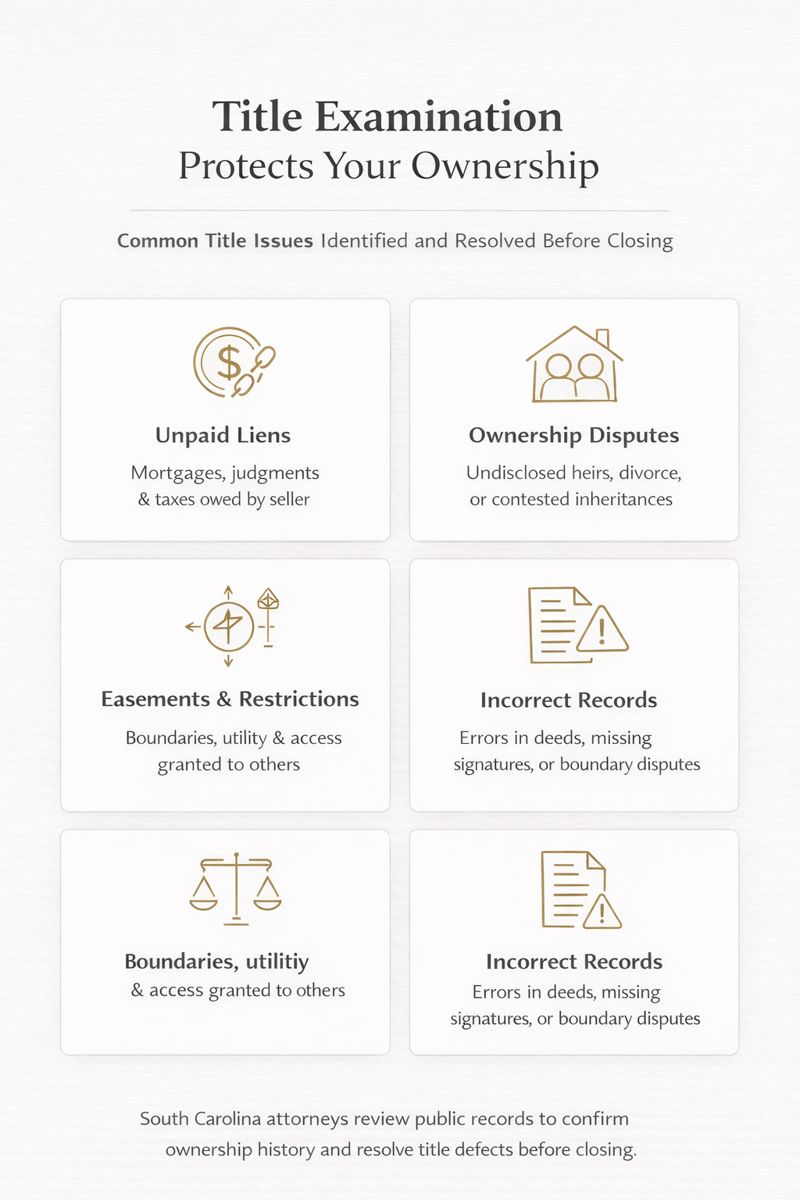
Title examination is a central component of South Carolina real estate law. Before property can be conveyed, an attorney must review public records to confirm that the title is clear and marketable.
Common title issues include unpaid mortgages, tax liens, judgment liens, boundary disputes, easements, and errors in prior deeds. Some issues are easily resolved; others require corrective deeds, affidavits, or court action.
Addressing title issues before closing helps prevent ownership disputes, refinancing problems, and complications when the property is later sold.
- Learn more about Title Issues
Deeds and Property Ownership
The deed is the legal instrument that transfers ownership of real property. South Carolina recognizes several types of deeds, including warranty deeds, special warranty deeds, and quitclaim deeds, each offering different levels of protection.
Ownership structure also matters. Property may be owned individually, jointly, as tenants in common, or through entities such as trusts or limited liability companies. The way property is titled can affect inheritance, liability exposure, and future transfers.
Choosing the correct deed and ownership structure is an important legal decision with long-term consequences.
- Learn more about Deeds & Ownership
Financing, Mortgages, and Refinancing
Most real estate transactions involve financing, which introduces additional legal requirements. Loan documents create enforceable obligations and grant lenders security interests in the property.
Attorneys review mortgage documents, promissory notes, and related disclosures to ensure compliance with state law and lender requirements. In refinancing transactions, attorneys confirm that prior liens are properly addressed and that the new loan is correctly recorded.
Careful handling of financing documents helps protect borrowers from unexpected legal or financial issues.
Real Estate Contracts and Disputes
While many transactions close smoothly, disputes can arise. These may involve contract interpretation, inspection disagreements, undisclosed defects, boundary issues, or title problems discovered after closing.
Some disputes can be resolved through negotiation or corrective action, while others require litigation or court intervention. Early legal guidance can often prevent disputes from escalating and help parties reach practical resolutions.
- Learn more about Real Estate Disputes
Land Use, Zoning, and Property Restrictions
Property ownership is subject to zoning ordinances, restrictive covenants, and land-use regulations. These rules govern how property may be used, developed, or modified.
Zoning issues can affect residential renovations, commercial development, and changes in property use. Restrictive covenants and homeowners’ association rules may impose additional limitations.
Understanding these restrictions before purchasing or developing property helps avoid costly surprises.
Why Legal Guidance Matters in Real Estate Matters
Real estate transactions are not merely administrative events. They involve enforceable contracts, statutory obligations, and long-term financial commitments. Legal guidance helps ensure that transactions are completed correctly, risks are identified, and future problems are minimized.
At Rivertown Law, the focus is on thoughtful representation, clear communication, and practical solutions. The goal is to help clients move through real estate transactions with confidence, knowing that their interests have been carefully protected.
Our Approach to Real Estate Law at Rivertown Law
We approach real estate matters with the understanding that each transaction represents more than a property—it represents a home, an investment, or a business decision with lasting implications.
Our role is to guide clients through the legal process with clarity and care, address issues before they become problems, and provide steady, practical advice at every stage of the transaction.

Start a Conversation
If you are buying, selling, refinancing, or dealing with a real estate issue in South Carolina, legal guidance can make the process clearer and more secure. We invite you to start a conversation with Rivertown Law to discuss your situation and explore your options.